




Industrial decarbonisation strategy
Contents |
[edit] Introduction
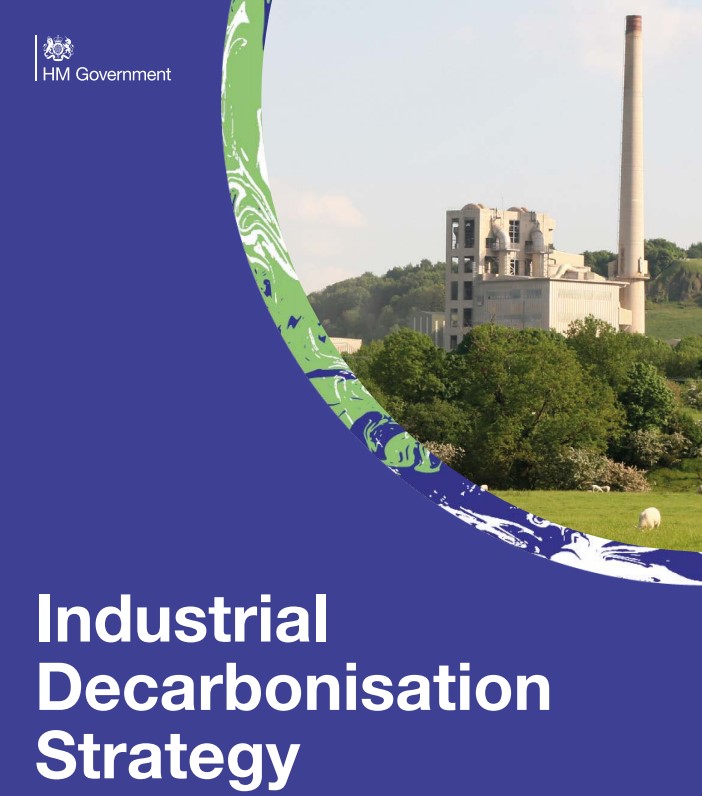
On 17 March 2021, the Government published an industrial decarbonisation strategy. The strategy will allocate more than £1 billion to cut emissions from industry, schools and hospitals. It also plans to create and support up to 80,000 jobs up to 2050.
[edit] Path to net zero
Building on the Prime Minister’s 10 Point Plan for a Green Industrial Revolution published in November 2020, the industrial decarbonisation strategy sets out the Government’s vision for building a competitive, greener future for manufacturing and construction as part of the path to net zero by 2050.
The strategy will support decarbonisation of existing industry and encourage the growth of new, low carbon industries, as well as giving businesses the long-term certainty to invest in new UK technology, rather than outsourcing to high-emission countries around the world.
It also includes measures to build on the UK’s efforts in moving towards greener energy sources, with an expectation of 20 terawatt hours of UK industry’s energy supply switching from fossil fuel sources to low carbon alternatives by 2030.
[edit] Tech projects
The Industrial Decarbonisation Challenge has allocated £171 million to green tech projects around the UK to undertake engineering and design studies for the rollout of decarbonisation infrastructure, such as carbon capture, usage and storage (CCUS) and the use of hydrogen. These projects include:
- North West (Merseyside). Hydrogen energy and carbon capture, usage and storage (CCUS) projects (HyNet North West).
- Scotland (St Fergus, Aberdeenshire). Offshore and onshore engineering studies connecting industrial sites across East Scotland with access to world-class, safe carbon storage resources in rock deep below the North Sea.
- Teesside. Flexible gas power plant (using carbon capture, usage and storage) and offshore CO2 transport and storage system.
- Humber. H2H Saltend (a low carbon hydrogen production plant) and CO2 and hydrogen pipelines (enabling industrial sites and power stations to switch to hydrogen and/or capture and transport their emissions). Funding will also be awarded to project Humber Zero, which plans to create a carbon capture and hydrogen hub.
- South Wales. South Wales Industrial Cluster (a net zero industrial zone from Pembrokeshire to the Welsh/English border) which will review options to support the deployment of hydrogen across regions and to develop carbon capture, usage and storage.
[edit] Public Sector Decarbonisation Scheme
£932 million is available from the Public Sector Decarbonisation Scheme to reduce carbon emissions from public buildings including hospitals, schools and council buildings. This programme funds low carbon heating systems, such as heat pumps, and energy efficiency measures like insulation and LED lighting.
The Government will also introduce rules on measuring the energy and carbon performance of the UK’s largest commercial and industrial buildings, including offices and factories, in England and Wales. The move could identify potential savings to businesses of around £2 billion a year and reduce annual carbon emissions by over two million tonnes.
The full list of 429 projects in England receiving funding from the Public Sector Decarbonisation Scheme is available here.
[edit] Additional features
Other key commitments include:
- Carbon pricing as a tool for getting industry to take account of their emissions in business and investment decisions.
- A policy framework to ensure switching from fossil fuels to low carbon alternatives such as hydrogen, electricity or biomass.
- A targeted approach to mitigate against carbon leakage that meets the Government’s domestic and global climate goals.
- New product standards, enabling manufacturers to clearly distinguish their products from high carbon competitors.
- Coordinated action on public procurement to create demand for green industrial products, helping drive down costs and allowing a broader market to develop.
[edit] Reaction
Business and Energy Secretary Kwasi Kwarteng said: “The Industrial Decarbonisation Strategy will send a clear signal to the market by setting out how the Government expects decarbonisation to happen, while improving investor confidence to unleash the private capital necessary to reach net zero by 2050.”
Stephen Phipson, CEO of Make UK said: “Plans to reduce carbon emissions in industrial buildings is particularly welcome as it will enable our SMEs to get started with this most urgent and basic need, before even green tech projects. Manufacturing is key in driving the solution to the green agenda and the whole industry is working together to lead the race to net zero.”
Challenge Director, Industrial Decarbonisation Challenge UK Research & Innovation (UKRI) Bryony Livesey said: “The benefits to these regional clusters will be substantial, both in terms of the environmental impact, as well as the opportunity for jobs and increasing the global competitiveness of industry in the areas.”
[edit] Related articles on Designing Buildings Wiki
- Building an industrial strategy.
- Net zero carbon 2050.
- The Government's 10-point plan: what's missing?
- UK decarbonisation.
- What has the UK done about carbon reduction since the Paris Agreement?
[edit] External resources
Featured articles
Check out some of the best features and news from Designing Buildings as well as key stories from around the web.

Government approach could undermine delivery and regeneration.
World's first mass timber data centre.

The overlooked environmental aspect of data centre development.
Introduction to radon awareness

New technical information sheet published by CIOB.

Updated supplier guide can help electrical contractors engage with NHP.

CIAT confirm the winners of the 2026 architectural technology awards.

Government launches a one stop shop for flood preparedness.

Sir Edwin Lutyens: Britain's greatest architect? Book review.

CIOB publishes free template to help assess and manage risks.
ECA's reflections on Party Conference season

Burnham wants to be confident of winning before asking for a fresh mandate.
New Chief Construction and Scientific Adviser

Sergio Cavalaro, Professor of Infrastructure Systems at Loughborough University.
Building safety levy for England

CIAT publish estimator tool for members.

Water sector faces a growing crisis that could slow the delivery of vital infrastructure.